


Buckle up!
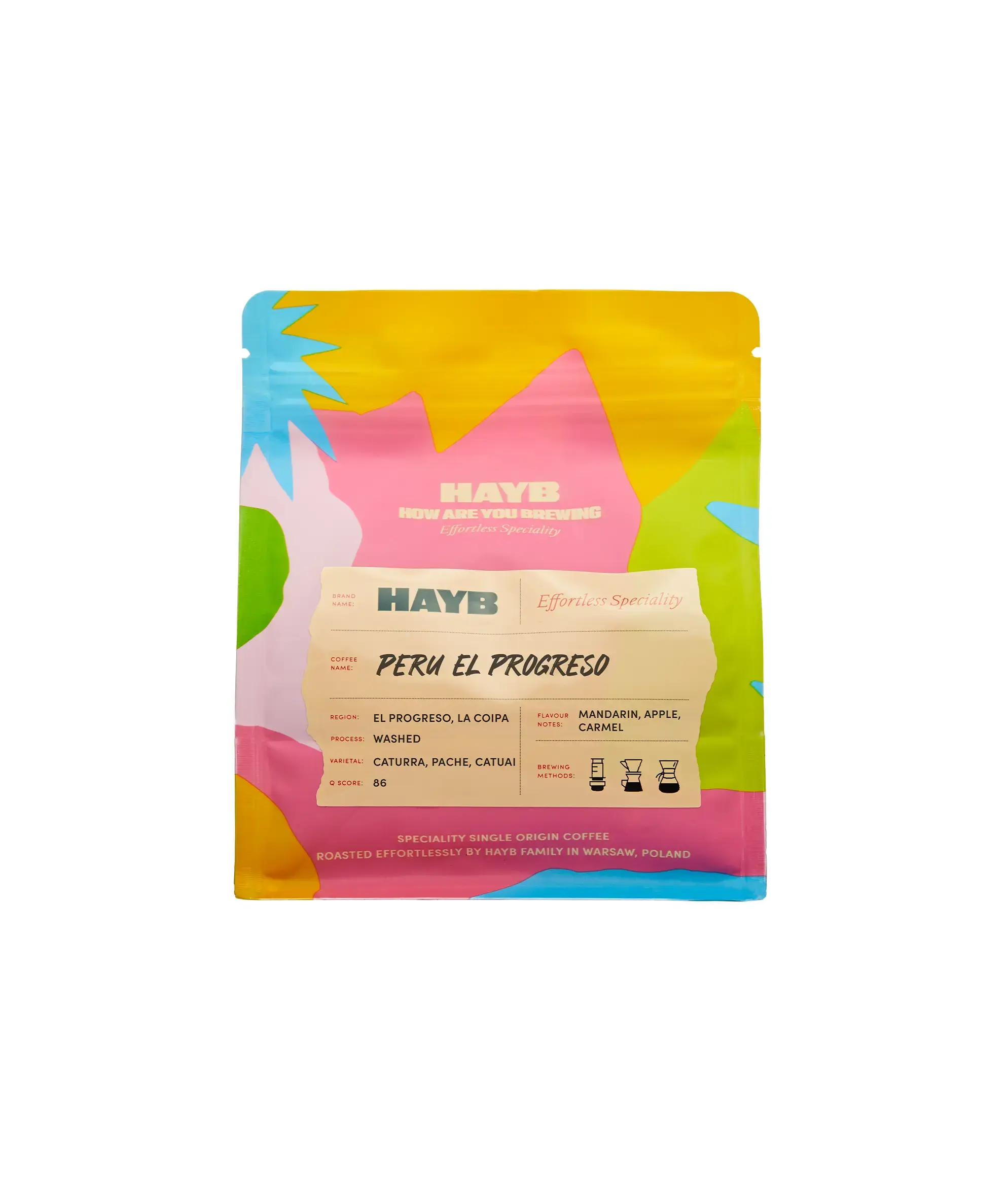
This coffee has been on quite a journey, and so have we. The itinerary includes: notes of tangerine, apple, and caramel.
We sourced this lot from an importer we’ve worked with for years, Falcon Coffee, who often supplies us with truly solid coffees. The beans come from various farmers around La Coipa in the San Ignacio district. These producers harvest and process their own coffee, then dry it traditionally on a patio lined with sturdy plastic.
The whole process goes something like this: after harvesting, the coffee cherries rest for 24 hours (yes, even coffee needs a break), then the floaters—those weaker cherries that don’t sink*—are removed. The cherries are then crushed to remove the pit and left to ferment for 24 to 36 hours. Afterward, the coffee is left to dry for 10 to 14 days.
Once everything is perfectly dry, the farmers bring the parchment-wrapped coffee to the Falcon Coffee warehouse in Jaén. There, Falcon conducts a double quality check–first physically (i.e., appearance and overall shape), and then sensoric. The same day, the farmer receives a price based on the results, and the money is quickly transferred to their account.
Finally, to prevent the coffee from losing its shape on the way to the mill and out into the world, everything is packed again–this time in an additional plastic bag. Because, as we know, coffee also likes to have a luxurious travel suitcase.
*If the cherry is ripe enough and contains everything we need, the good ones sink to the bottom of the large tub into which they are placed, while the “floaters” are removed and end up as second- or third-rate coffees.


